Grainy gradient
Soft gradients with visible film-grain noise on top: tactile and analog, warmer than a clean digital gradient.
Try it
Ground
gradient
Surface
#fff7ed
Text
#1c1917
Accent
#c2410c
- Type
- sans
- Radius
- 16px
- Material
- box-shadow:0 12px 32px rgba(28,25,23,.18)
This screen uses only the look's tokens. Click, type and toggle it. The libraries below are what your agent installs to build the real thing.
What your agent builds it with
Component kits
shadcn/uiCopy-in React components on Tailwind, built on Base UI, Radix or React Aria, plus a registry CLI.the default component layer for a new React + Tailwind app or SaaS dashboard
the project is Vue, Svelte or Solid: use shadcn-vue, shadcn-svelte or Kobalte
Motion
MotionThe default animation library for React (formerly Framer Motion): springs, gestures, layout and exit animations.dialogs, popovers and panels that must animate out before they unmount (AnimatePresence)
a hover colour change or a one-shot fade: a CSS transition costs zero bytes
Text effects
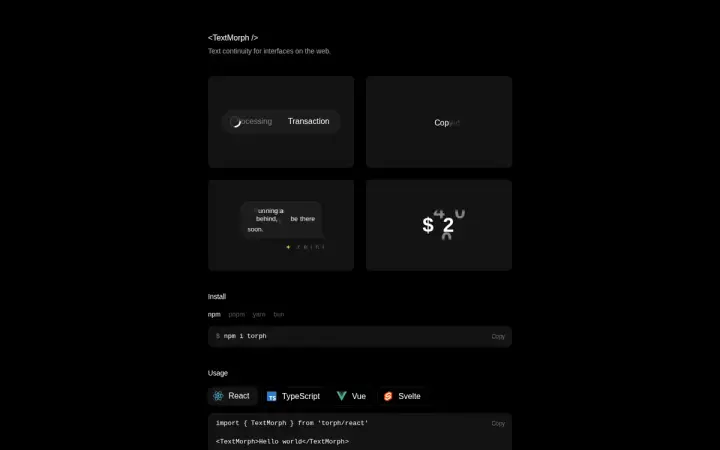
TorphAnimated text morphing: labels change letter by letter instead of swapping.copy button that confirms in place (Copy -> Copied)
long paragraphs or body copy: morphing many glyphs reads as noise
Icons
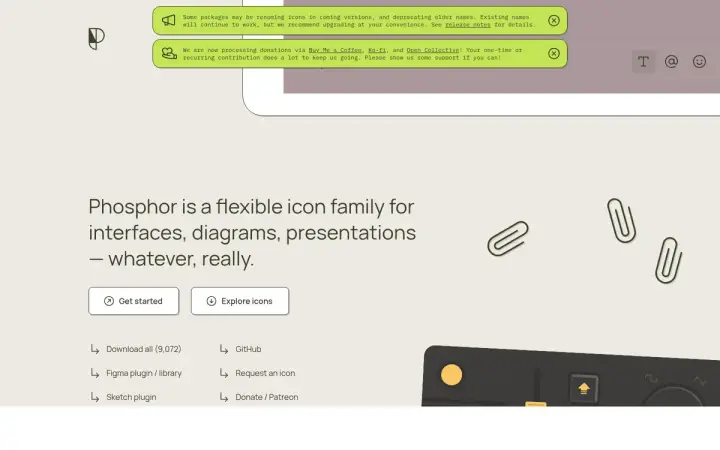
Phosphor IconsLarge icon family in six weights: thin, light, regular, bold, fill and duotone.selected vs unselected states (regular icon idle, fill icon active) in tab bars and nav
a shadcn/ui project already on Lucide: mixing two stroke styles looks off, stay on lucide
Backgroundsalways
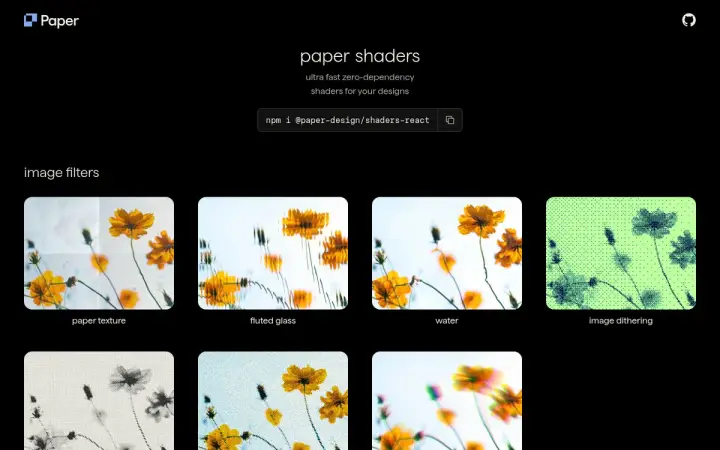
Paper ShadersZero-dependency WebGL shader backgrounds: mesh gradients, grain, dithering, liquid metal and more.hero background with a slow mesh or grain gradient behind headline text
you need a real 3D scene with camera and objects: use r3f

The plan your agent reads
For “landing page with a signup form, a pricing table and toasts” in Grainy gradient: the plan tool's answer, word for word
look: Grainy gradient (grainy-gradient, organic family)
framework: react (assumed; pass framework)
build with every line below: run its install (shadcn init works in any React + Tailwind app and adds only components.json, lib/utils.ts and theme tokens), build its part with it (usage under it), then adapt it to the rules below. A hand-written stand-in for a listed part (a <details> for an Accordion) is a miss
component-kit (its parts for this page) -> shadcn-ui: a settings page, data table, form or sidebar app shell you will restyle to your brand | npx shadcn@latest init -b base -p nova && npx shadcn@latest add button card badge table input label | else: mantine, boardui
motion (presses, gestures, menus and entrances) -> motion: The default animation library for React (formerly Framer Motion): springs, gestures, layout and exit animations. (look's pick) | npm i motion
feedback (toasts) -> sonner: progress of an async task the user can walk away from (toast.promise) | npm i sonner | else: react-hot-toast, ding
  import { Toaster, toast } from 'sonner'
  <Toaster position="bottom-right" />
  <button onClick={() => toast('Invite sent', { action: { label: 'Undo', onClick: undoInvite } })}>Invite</button>
icons (every icon on the page: one size and stroke, set once) -> lucide: pairs with shadcn/ui | npm i lucide-react | else: phosphor
  import { LucideProvider, Search } from 'lucide-react'
  <LucideProvider size={16} strokeWidth={1.5}>
  <Search aria-hidden />
  </LucideProvider>
done when: every package above is imported where its part is, and no listed part is hand-written

vs: Not mesh gradient: the noise texture is the point and colours are often muted. Not risograph or dither: fine continuous grain, not halftone dots or stepped pixels.
type: A characterful grotesk or soft serif (Instrument Sans, Neue Montreal-like, Fraunces for display) at 500-600; large headlines over the grain, small UI text only on solid surfaces.
colour: Two or three hues (tangerine #f97316, magenta #db2777, indigo #4f46e5, or sage and sand for calmer brands) in a wide soft blend, with 8-15% grain on top from an SVG feTurbulence tile or paper-shaders GrainGradient. Grain stays on the gradient; text, inputs and cards sit on clean solid surfaces.
motion: Mostly static. If colours drift, keep it slow (speed 0.1-0.2) and keep the grain fixed rather than boiling. A CSS gradient plus a tiled SVG noise costs nothing.
avoid: grain over text, inputs or photos; boiling animated noise across the page; grain strong enough to read as a dirty screen (over ~15%); a huge noise PNG instead of a tiled SVG or shader
refs: name a real one first: the user's, else search Mobbin, Refero or Inspo (free) if connected, else CSS-Tricks: Grainy Gradients css-tricks.com, Paper Grain Gradient shaders.paper.design or a DESIGN.md from styles.refero.design or devault.design, and say how to connect one (get references)
brief first: build every part it names before styling; the first screen shows the main content working, not an empty hero; at desktop width fill it (columns, a side panel), never a phone-width column in empty space
never, whatever the look: text under 4.5:1 contrast (on glass, over its lightest backdrop); a headline clipped or split mid-word at 390px; a font named, not loaded
Rules
- Type
- A characterful grotesk or soft serif (Instrument Sans, Neue Montreal-like, Fraunces for display) at 500-600; large headlines over the grain, small UI text only on solid surfaces.
- Colour
- Two or three hues (tangerine #f97316, magenta #db2777, indigo #4f46e5, or sage and sand for calmer brands) in a wide soft blend, with 8-15% grain on top from an SVG feTurbulence tile or paper-shaders GrainGradient. Grain stays on the gradient; text, inputs and cards sit on clean solid surfaces.
- Motion
- Mostly static. If colours drift, keep it slow (speed 0.1-0.2) and keep the grain fixed rather than boiling. A CSS gradient plus a tiled SVG noise costs nothing.
Goes wrong when
- grain over text, inputs or photos
- boiling animated noise across the page
- grain strong enough to read as a dirty screen (over ~15%)
- a huge noise PNG instead of a tiled SVG or shader
Not to be confused with
- Mesh gradientthe noise texture is the point and colours are often muted.
- risograph or ditherfine continuous grain, not halftone dots or stepped pixels.
Also in Organic / soft
- Organic / soft
- Mesh gradient
- Neumorphism
- Soft pastel
- Earthy / biophilic
- Japandi
- Wabi-sabi
- Scandinavian
- Lo-fi
- Cottagecore
Brief words that land here
grainy gradient · grain gradient · grainy · noise gradient · noisy gradient · film grain · grain texture