Sci-fi HUD
Film-style futuristic interface: thin cyan line work, corner brackets, telemetry readouts and radar arcs on near-black, calm and precise.
Try it
Ground
#02080c
Surface
#04121a
Text
#bff6ff
Accent
#29e1ff
- Type
- mono, on a dark ground
- Radius
- 0px
- Material
- border:1px solid rgba(41,225,255,.45); box-shadow:inset 0 0 24px rgba(41,225,255,.08)
This screen uses only the look's tokens. Click, type and toggle it. The libraries below are what your agent installs to build the real thing.
What your agent builds it with
Component kits
Magic UIAnimated landing-page components for React + Tailwind, installed through the shadcn CLI.a SaaS landing page: logo marquee, animated beam integrations diagram, bento grid, number ticker
inside a dense dashboard or app chrome: the effects become noise; use shadcn-ui or kobra
Motion
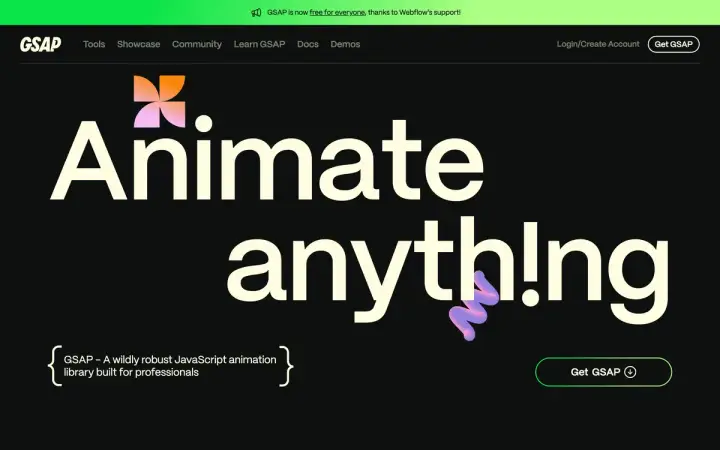
GSAPTimeline animation engine with ScrollTrigger, SplitText, Flip and MorphSVG, now free including every plugin.scroll-triggered reveals and pinned sections that scrub as you scroll (ScrollTrigger)
app UI state (open/close, presence, layout reflow) in React: use motion, which is declarative and handles unmount
Text effects
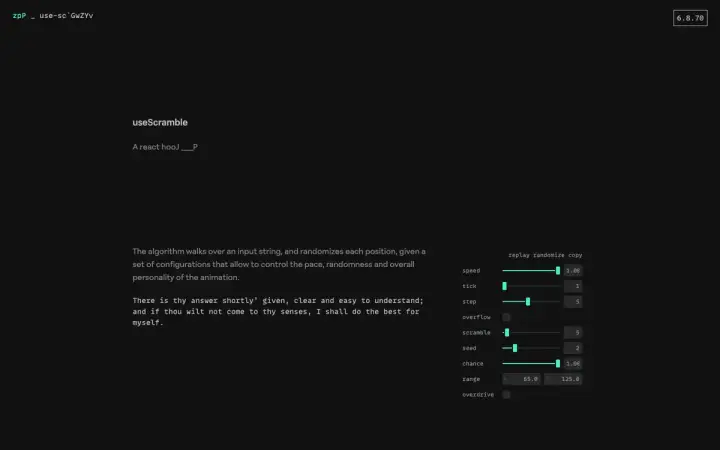
useScramble1 KB React hook that scrambles text through random characters before settling (decrypt effect).a terminal or hacker-styled heading that decodes on load or hover
minimal, apple, luxury or corporate looks: the effect reads as gimmicky
Icons
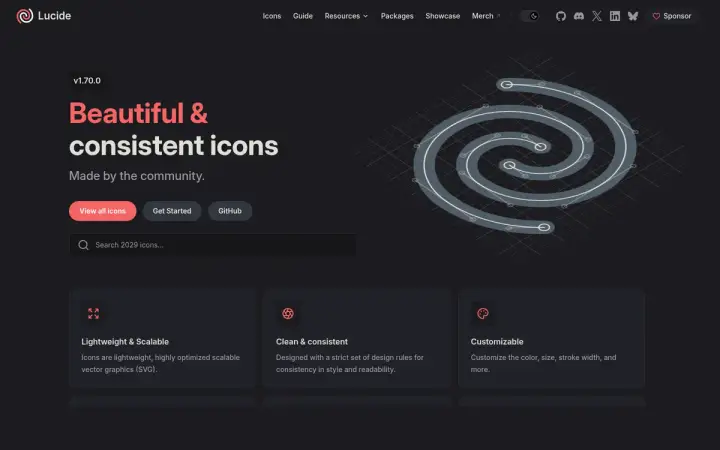
LucideClean 24px stroke icons, one component per icon, the default set for shadcn/ui.app UI icons in a shadcn/ui or Base UI project (buttons, menus, sidebars)
brand or company logos: Lucide 1.x ships no brand icons, use simple-icons
Backgroundsalways
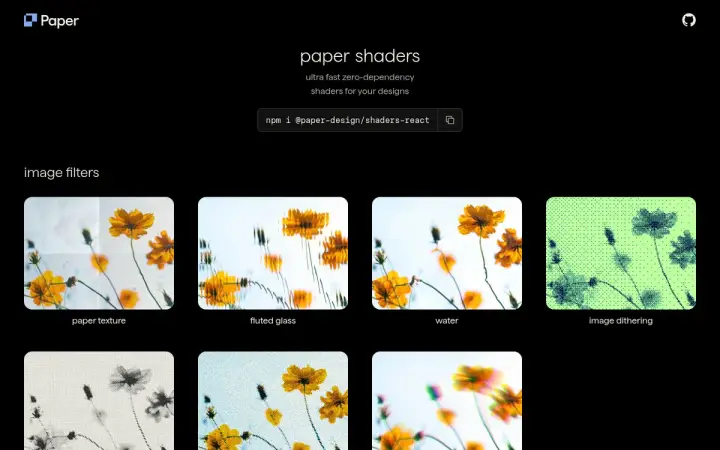
Paper ShadersZero-dependency WebGL shader backgrounds: mesh gradients, grain, dithering, liquid metal and more.hero background with a slow mesh or grain gradient behind headline text
you need a real 3D scene with camera and objects: use r3f
3D
React Three FiberReact renderer for three.js: build 3D scenes as JSX components with hooks.interactive 3D hero objects in a React or Next.js landing page
a decorative gradient or noise background: use paper-shaders, no 3D stack needed

The plan your agent reads
For “landing page with a signup form, a pricing table and toasts” in Sci-fi HUD: the plan tool's answer, word for word
look: Sci-fi HUD (sci-fi-hud, neon family)
framework: react (assumed; pass framework)
build with every line below: run its install, build its part with it (usage under it), then adapt it to the rules below. A hand-written stand-in for a listed part (a <details> for an Accordion) is a miss
component-kit (its parts for this page) -> mantine: a dense dashboard with date range pickers, rich tables, forms with validation and notifications from one vendor | npm i @mantine/core @mantine/hooks | use its Button, Card, Badge, Table, Input | else: boardui, coss-ui
motion (presses, gestures, menus and entrances) -> gsap: Timeline animation engine with ScrollTrigger, SplitText, Flip and MorphSVG, now free including every plugin. (look's pick) | npm i gsap @gsap/react | else: motion
feedback -> mantine: the base kit ships it | else: sonner, react-hot-toast
background (the Sci-fi HUD look needs it) -> paper-shaders: Zero-dependency WebGL shader backgrounds: mesh gradients, grain, dithering, liquid metal and more. (look's pick) | npm i @paper-design/shaders-react@0.0.82 | else: ogl
  import { MeshGradient } from '@paper-design/shaders-react'
  const reduce = typeof window !== 'undefined' && matchMedia('(prefers-reduced-motion: reduce)').matches
  <MeshGradient
  colors={['#0a0a0a', '#1e1b4b', '#4c1d95', '#0a0a0a']}
  distortion={0.8}
  swirl={0.4}
  speed={reduce ? 0 : 0.2}
  style={{ position: 'absolute', inset: 0 }}
  />
icons (every icon on the page: one size and stroke, set once) -> lucide: Clean 24px stroke icons, one component per icon, the default set for shadcn/ui. (look's pick) | npm i lucide-react
  import { LucideProvider, Search } from 'lucide-react'
  <LucideProvider size={16} strokeWidth={1.5}>
  <Search aria-hidden />
  </LucideProvider>
done when: every package above is imported where its part is, and no listed part is hand-written

vs: Not cyberpunk: clean, thin and mostly one colour, no glitch, grime or acid yellow. Not game-ui: framing for dashboards and product pages, not health bars and inventories. Not terminal: vector lines and smooth draws, not phosphor text.
type: Squared tech sans (Rajdhani, Oxanium, Titillium Web) uppercase at 11-13px with 0.12-0.2em tracking for labels; tabular mono (JetBrains Mono, IBM Plex Mono) for values; headings small, not huge.
colour: Blue-black ground #02080c, one line colour (cyan #29e1ff or amber #ffb000) at 100% for active, 40% for structure and 15% for grids, plus one alert red #ff3b3b. 1px strokes and corner brackets instead of full borders, a faint grid behind.
motion: Frames draw in (SVG stroke-dashoffset, 300-500ms ease-out), numbers tick, labels decode once on enter, scan lines sweep slowly. Sounds only if opt-in. Show final states under reduced motion.
avoid: filled glowing buttons everywhere; more than one line colour plus alert; decoding text the user rereads; fake telemetry numbers in a real product
refs: name a real one first: the user's, else search Mobbin, Refero or Inspo (free) if connected, else HUDS+GUIS hudsandguis.com, Arwes github.com or a DESIGN.md from styles.refero.design or devault.design, and say how to connect one (get references)
brief first: build every part it names before styling; the first screen shows the main content working, not an empty hero; at desktop width fill it (columns, a side panel), never a phone-width column in empty space
never, whatever the look: text under 4.5:1 contrast (on glass, over its lightest backdrop); a headline clipped or split mid-word at 390px; a font named, not loaded
Rules
- Type
- Squared tech sans (Rajdhani, Oxanium, Titillium Web) uppercase at 11-13px with 0.12-0.2em tracking for labels; tabular mono (JetBrains Mono, IBM Plex Mono) for values; headings small, not huge.
- Colour
- Blue-black ground #02080c, one line colour (cyan #29e1ff or amber #ffb000) at 100% for active, 40% for structure and 15% for grids, plus one alert red #ff3b3b. 1px strokes and corner brackets instead of full borders, a faint grid behind.
- Motion
- Frames draw in (SVG stroke-dashoffset, 300-500ms ease-out), numbers tick, labels decode once on enter, scan lines sweep slowly. Sounds only if opt-in. Show final states under reduced motion.
Goes wrong when
- filled glowing buttons everywhere
- more than one line colour plus alert
- decoding text the user rereads
- fake telemetry numbers in a real product
Not to be confused with
- Cyberpunkclean, thin and mostly one colour, no glitch, grime or acid yellow.
- Game UIframing for dashboards and product pages, not health bars and inventories.
- Terminal (CRT)vector lines and smooth draws, not phosphor text.
Also in Neon / cyber
Brief words that land here
sci-fi hud · futuristic hud · sci-fi ui · sci-fi interface · heads-up display · spaceship ui · tactical ui